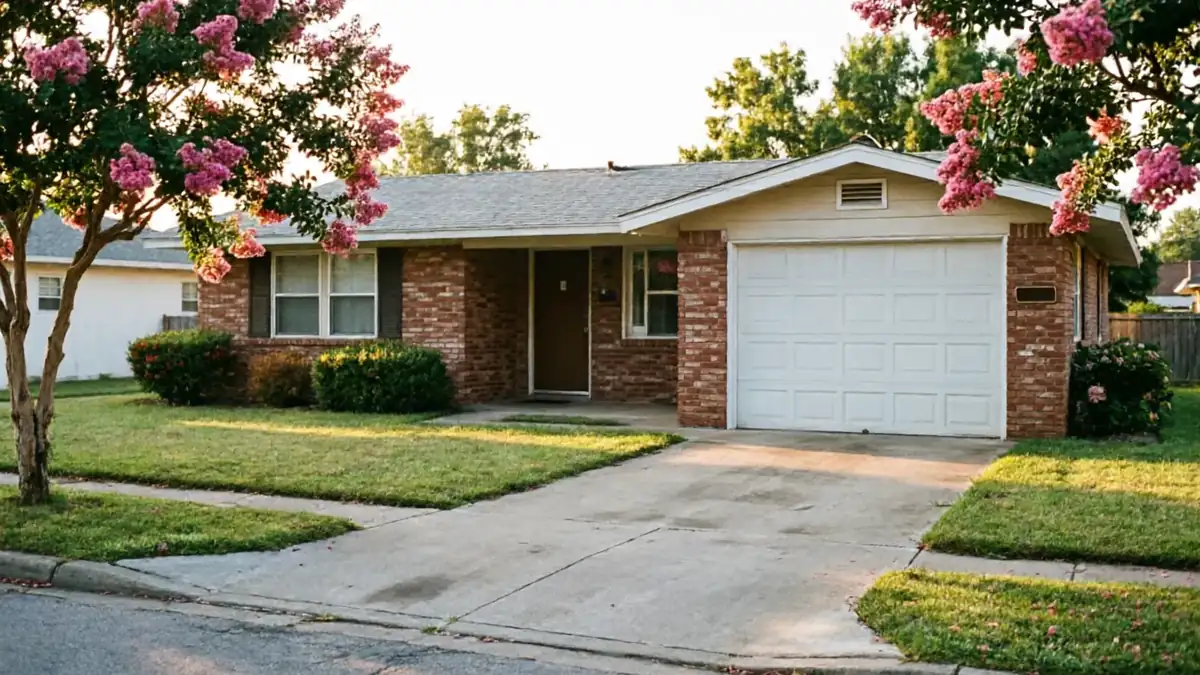
Laredo Garage Door Pros fixes springs, openers, and tracks worn down by Laredo's severe heat and the 1975-2007 housing stock common across the area. Same service, no guesswork.
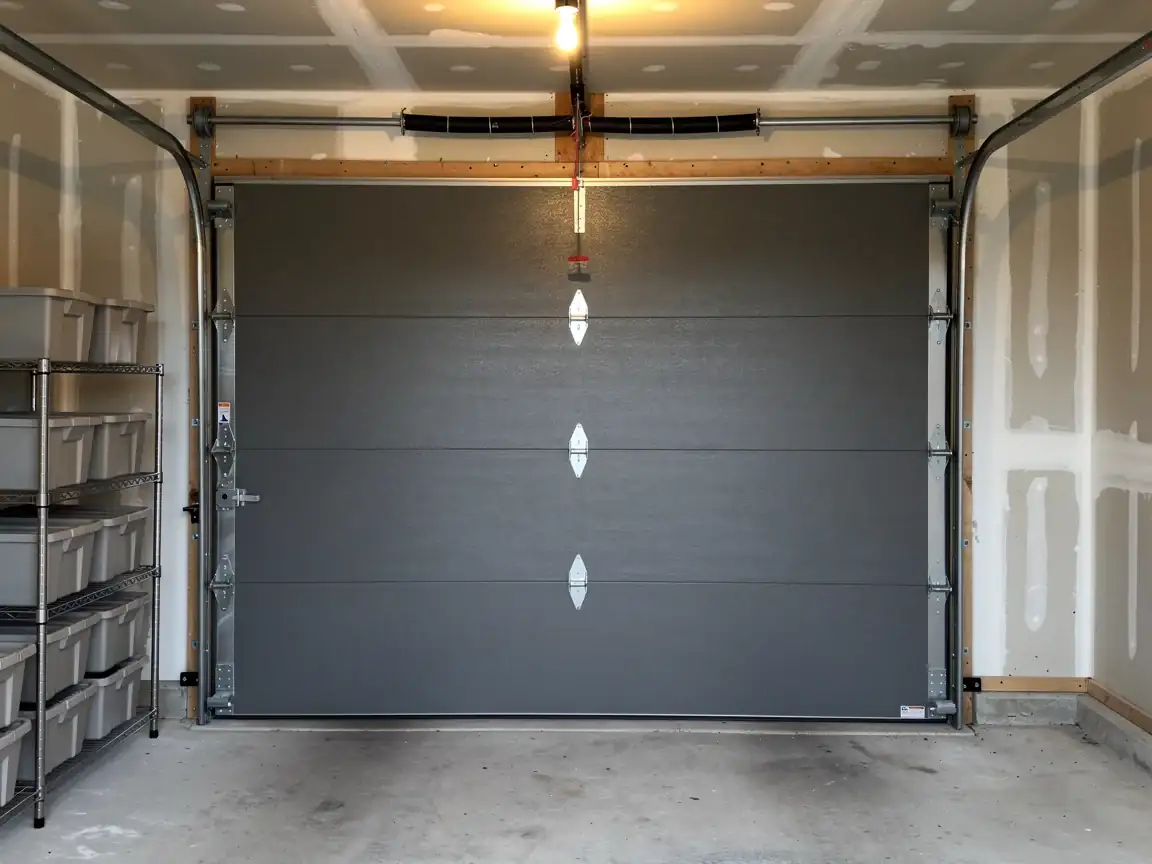
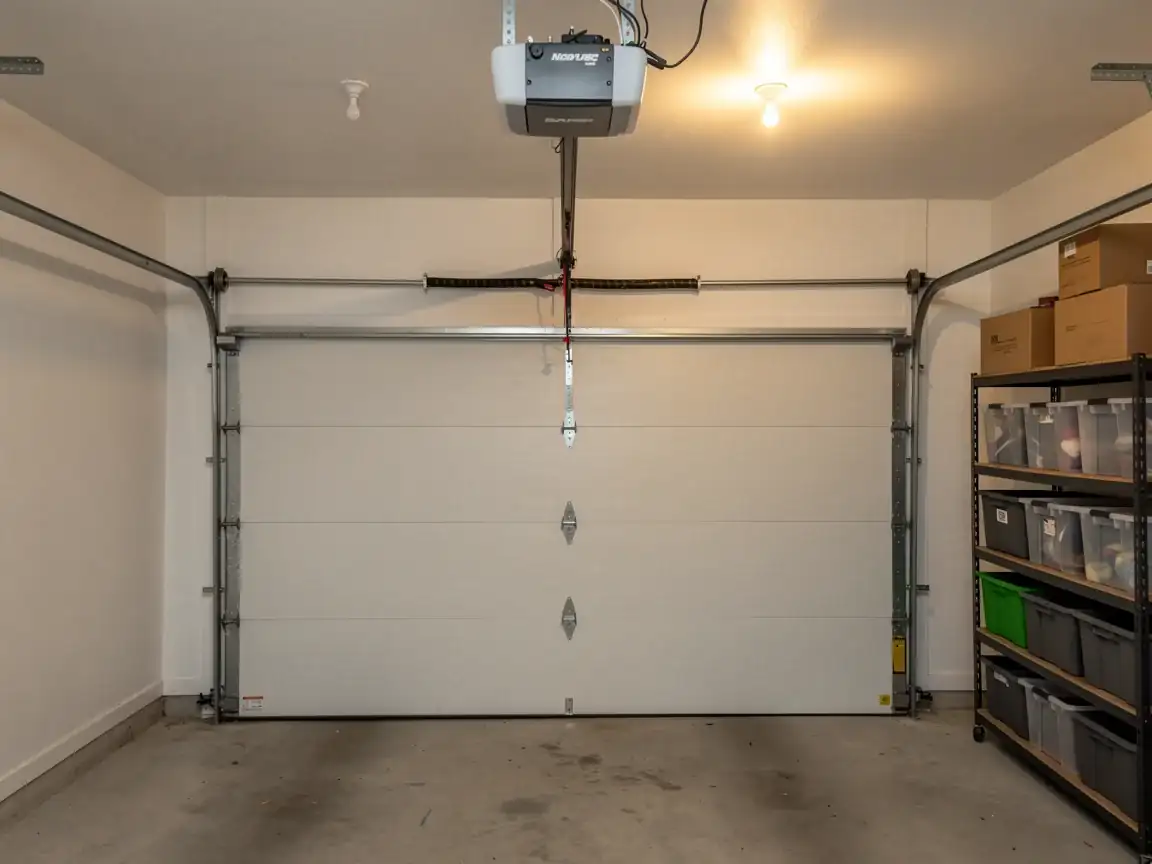
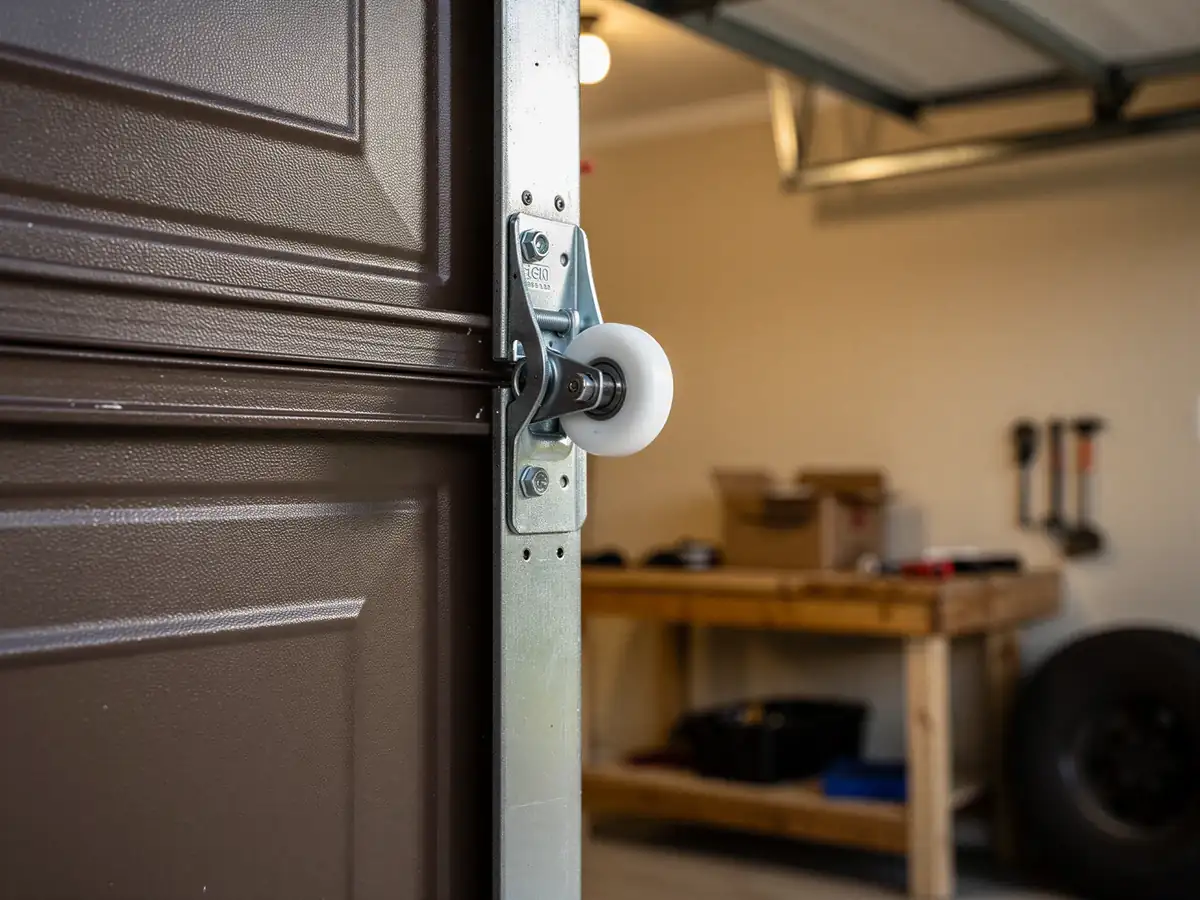
Most of the houses we work on went up between 1975 and 2007, with the median around 1992, and that era settled on a narrow set of hardware: torsion springs in a handful of standard wire sizes, steel rollers that got swapped for nylon somewhere in the 90s, and chain-drive openers bolted to joists that haven't moved since. We carry those springs, rollers, cables, and drums on the truck, along with the common 1/2 hp and 3/4 hp opener motors you'll find in the three main pockets of housing stock we see most - the subdivisions built in that same 1980s-90s run. What we don't carry is the obsolete circuit board for an opener that's outlived its own manufacturer; if your unit is one of the oldest in the fleet, that part sometimes has to be ordered, and we'll tell you that up front instead of pretending we have it in the van. For everything else - springs, cable, rollers, hinges, the standard track hardware this housing stock uses - it's on the truck and the job gets done same visit.
How We Fix It
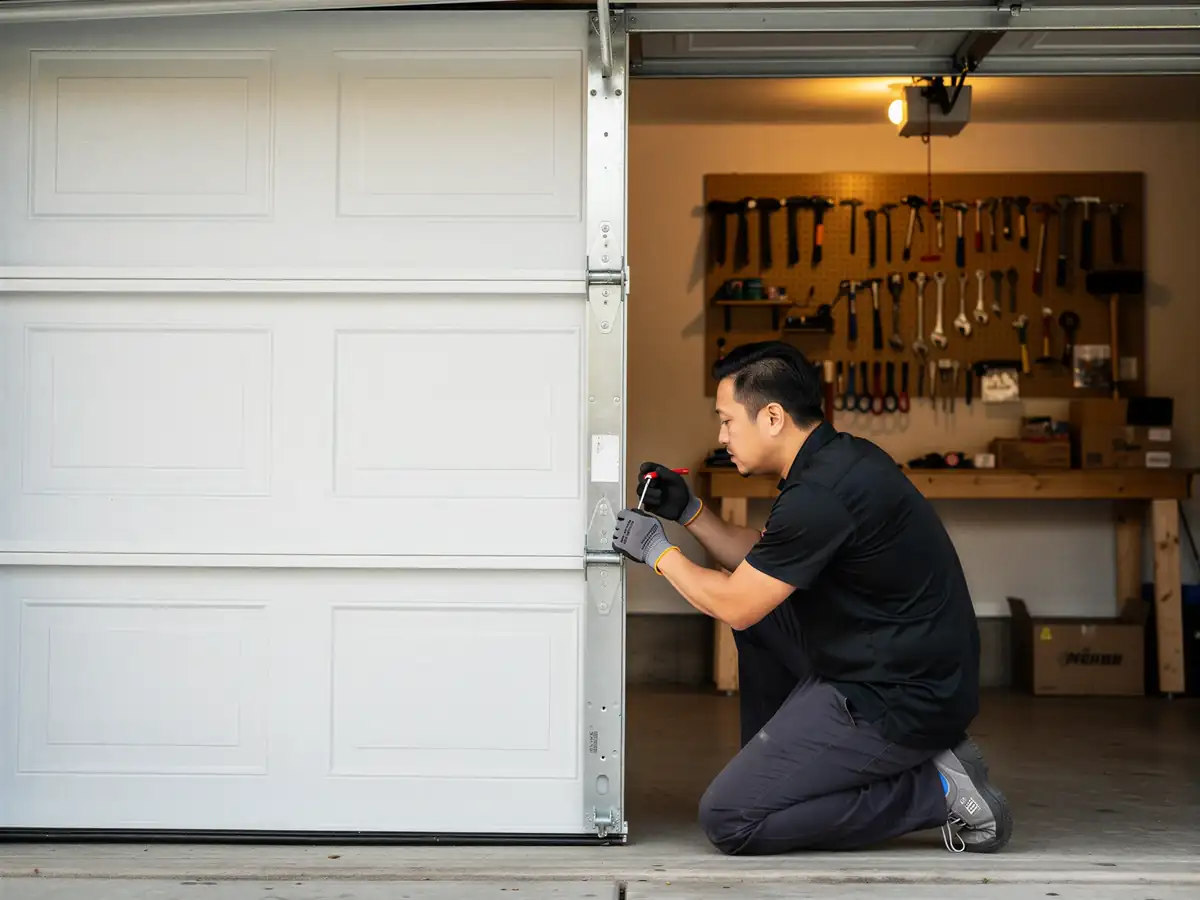
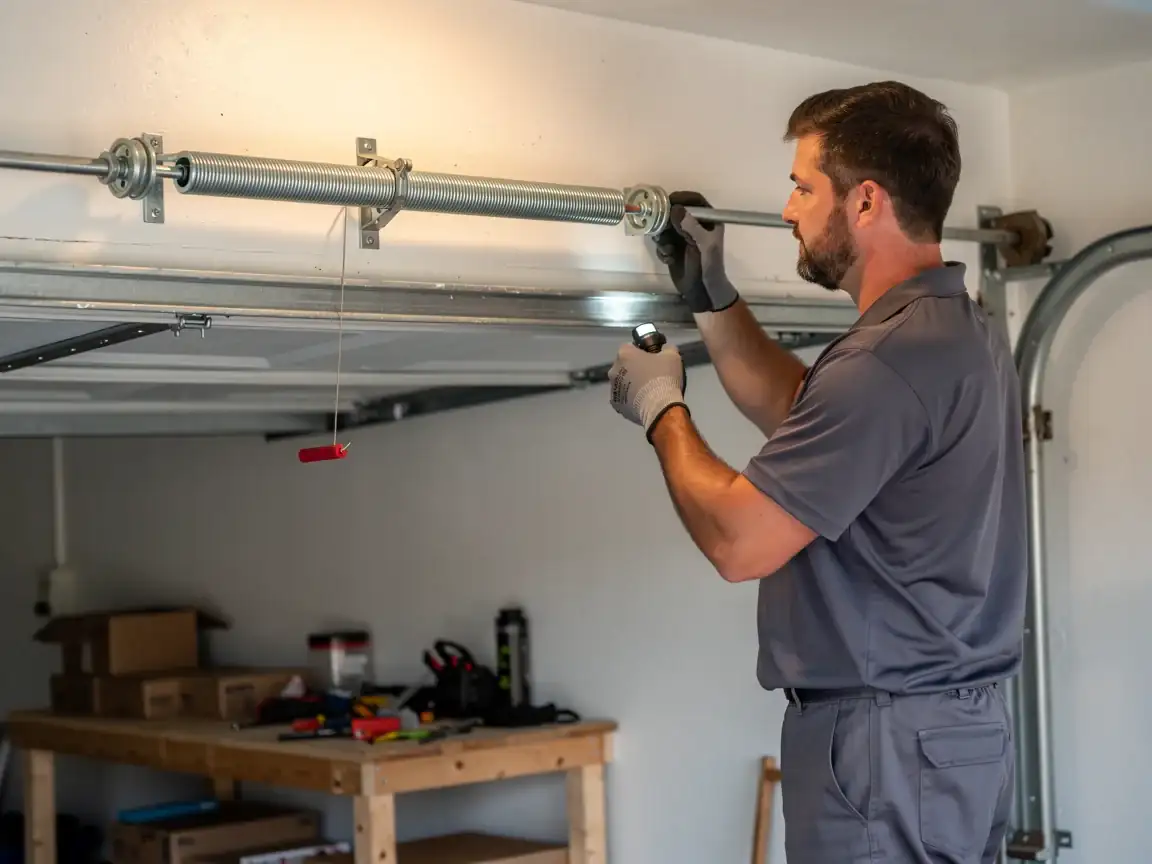
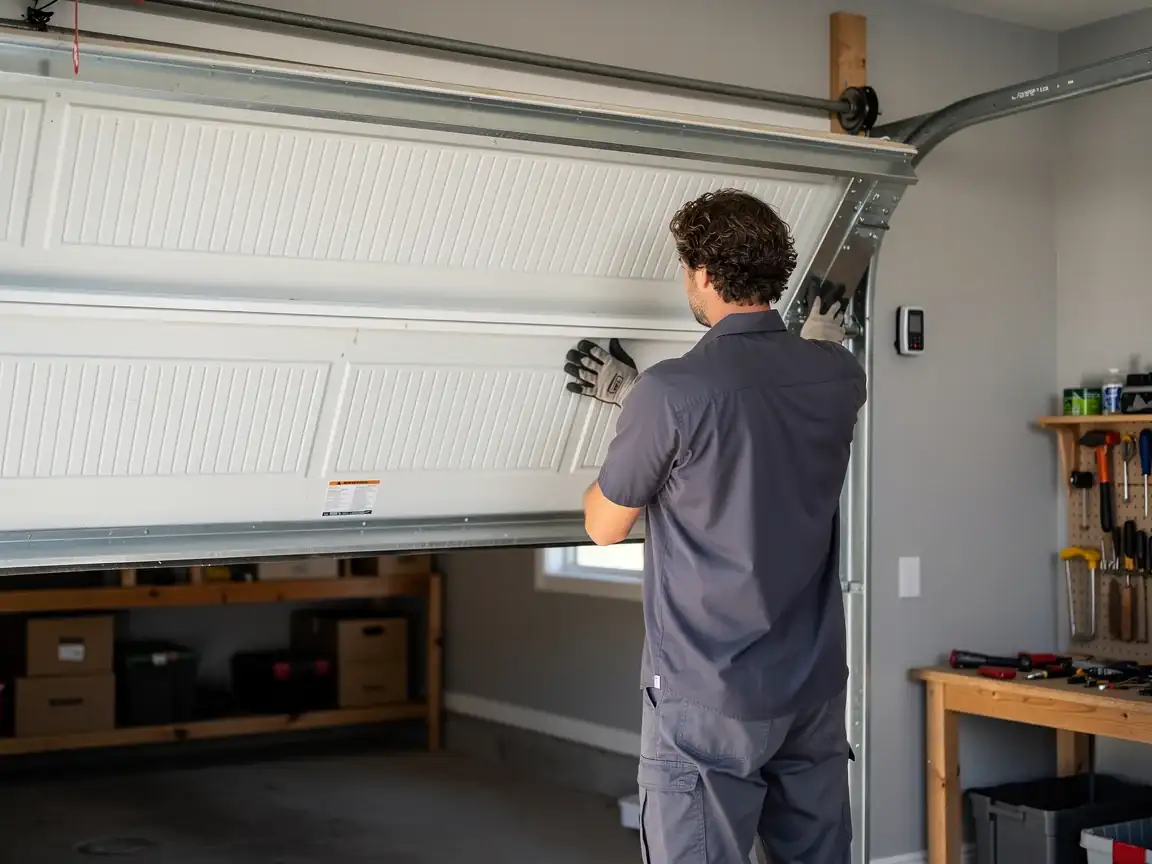
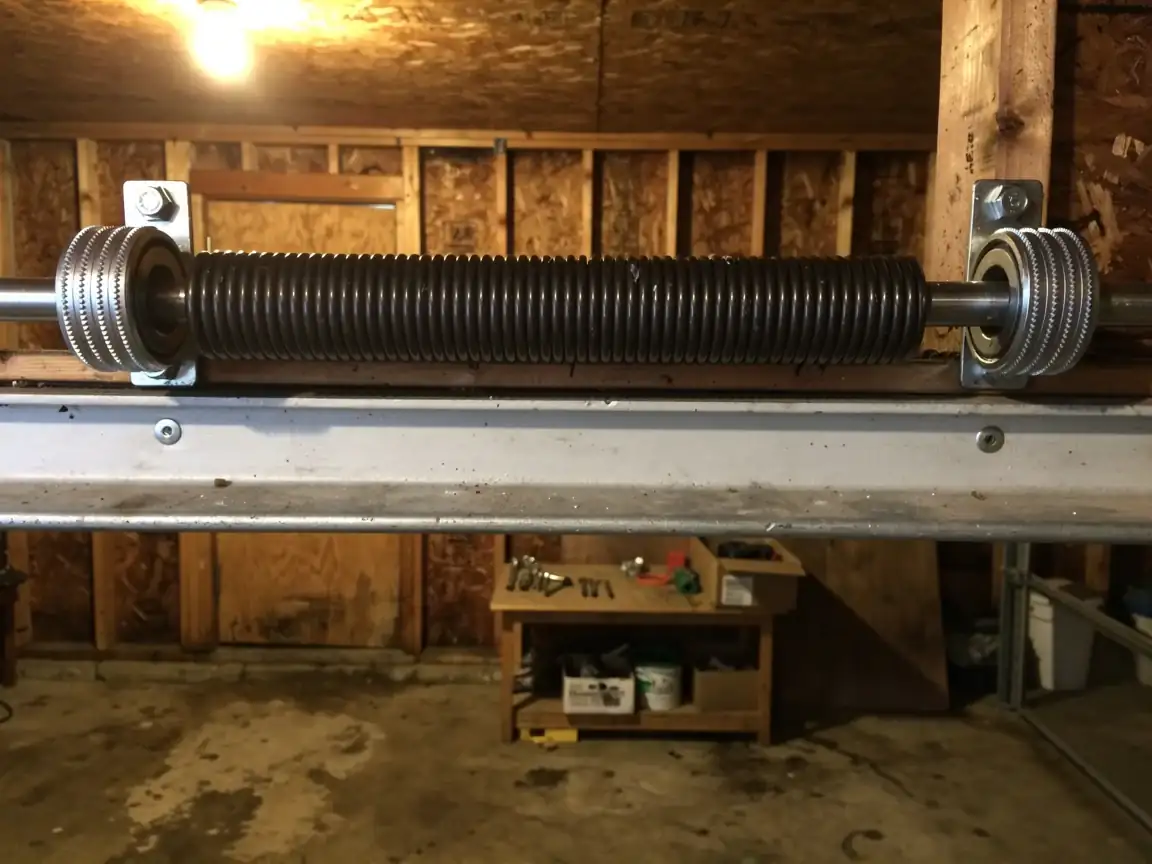
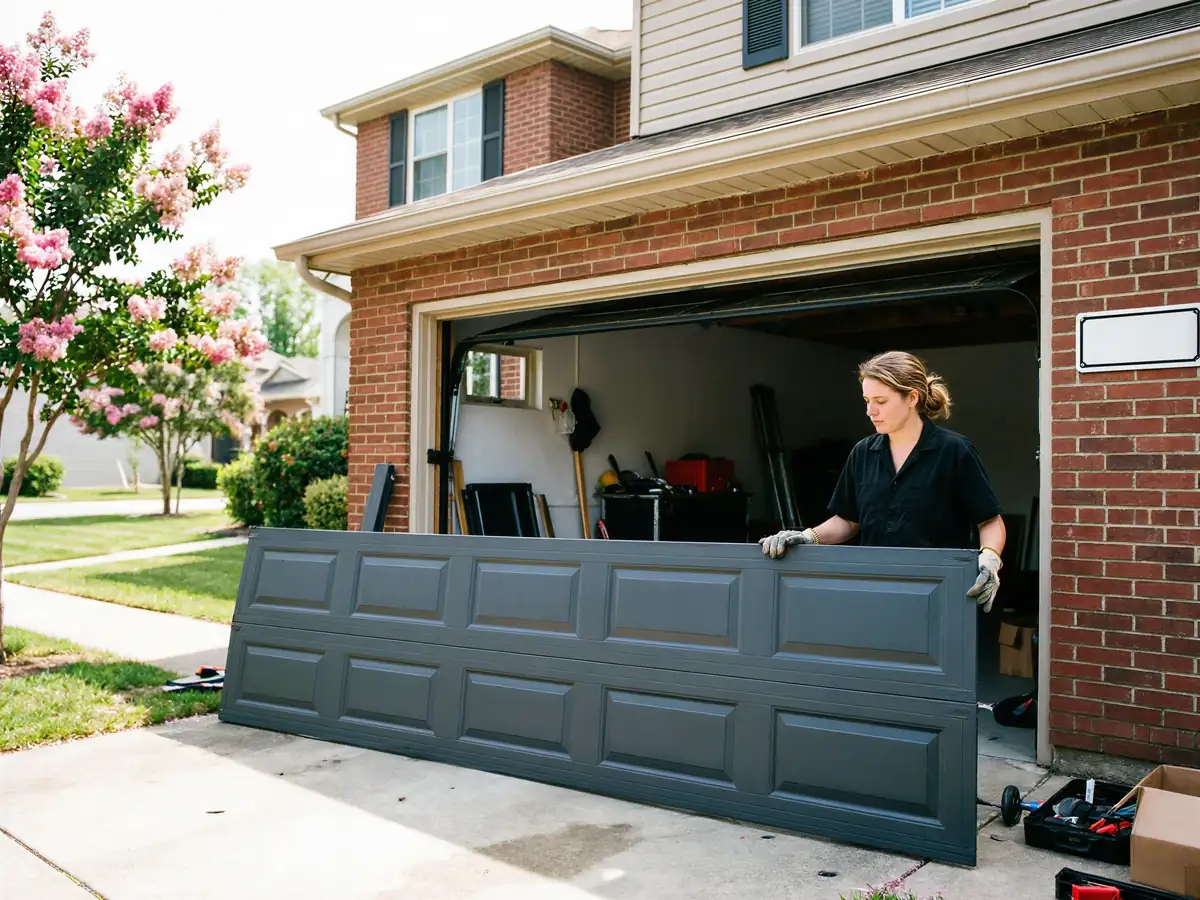
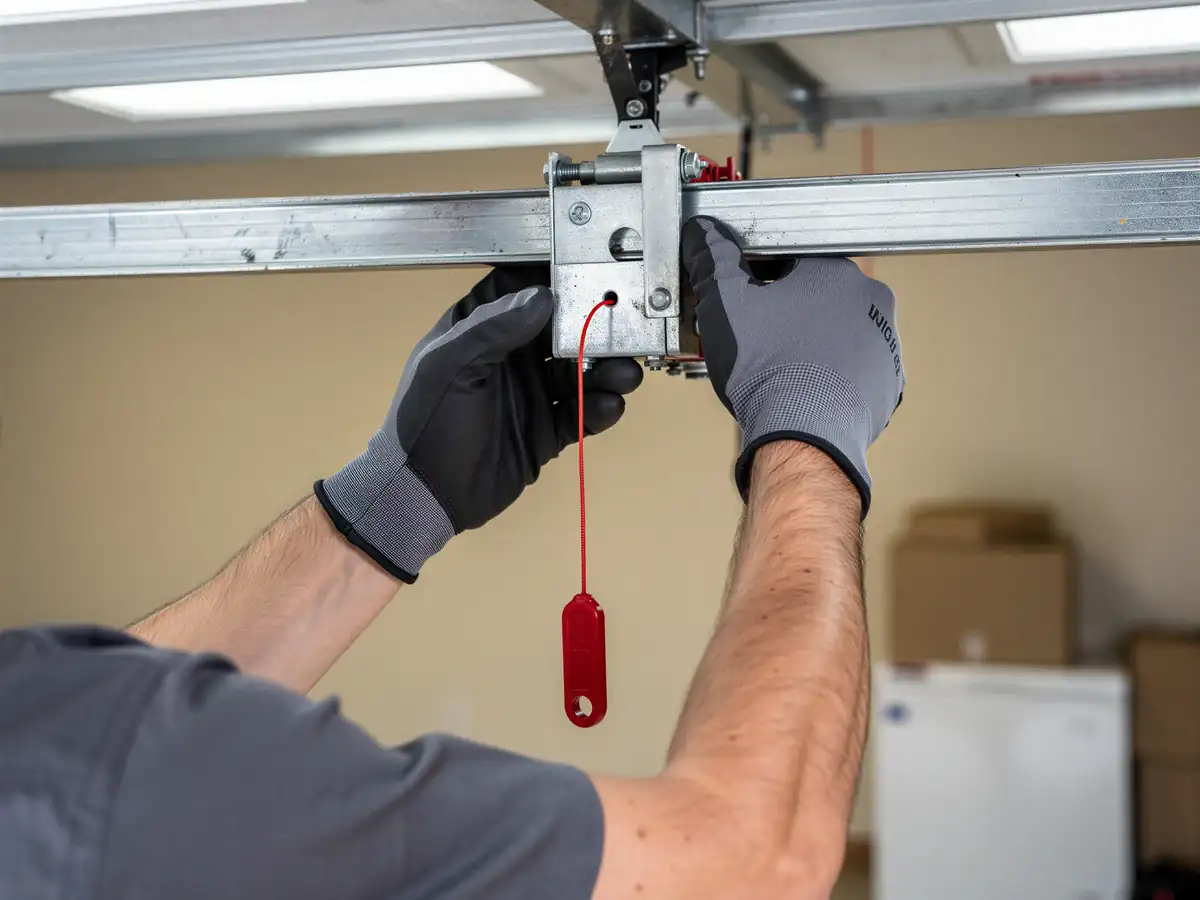
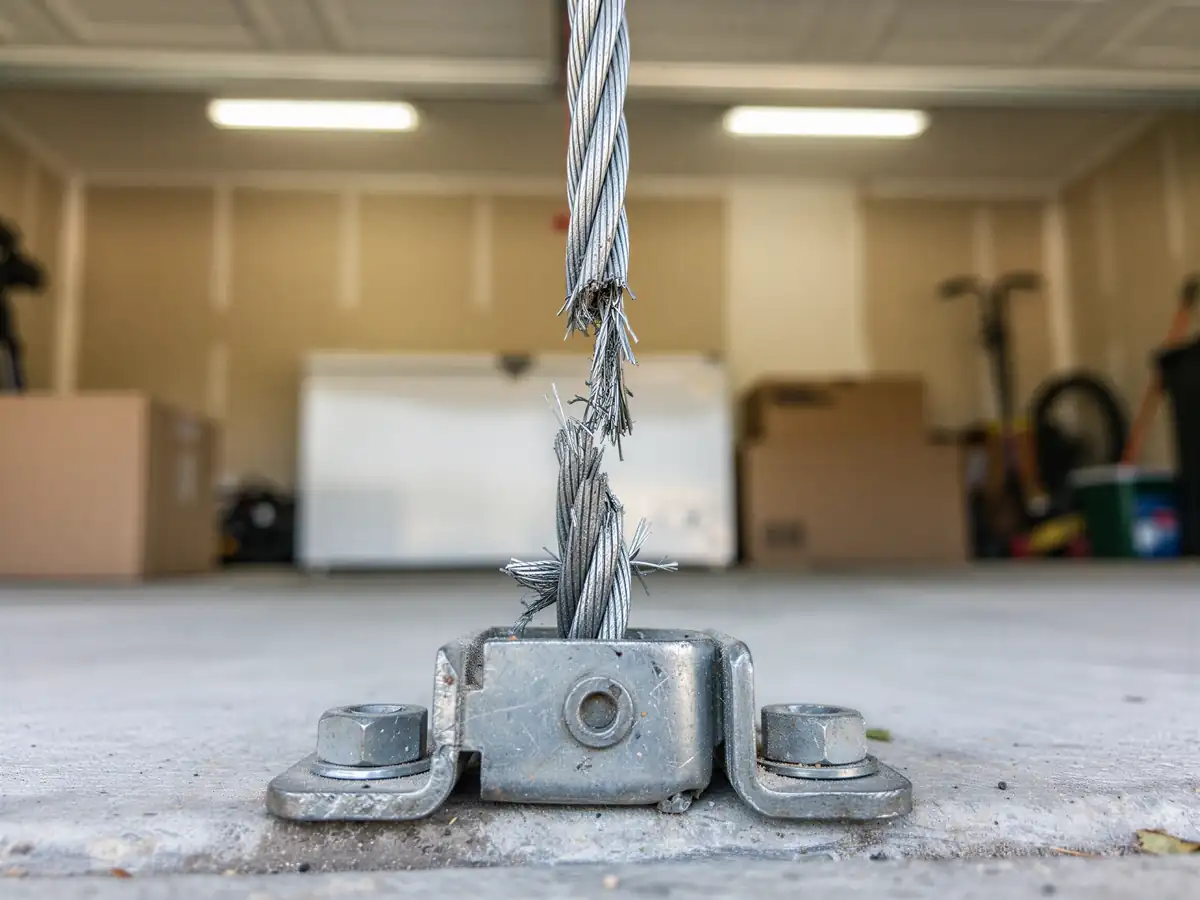
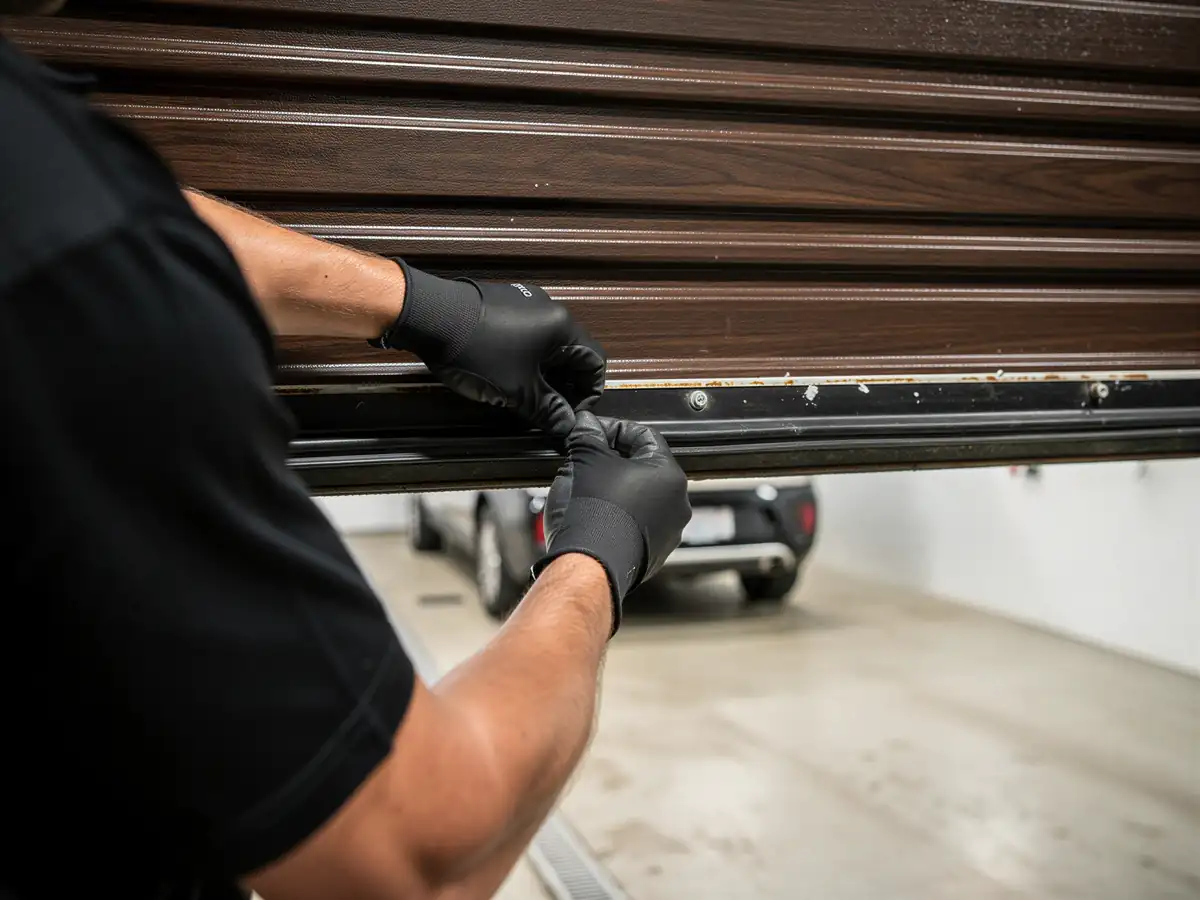
We start by cycling the door by hand with the opener disengaged, because that tells us in thirty seconds whether the problem is spring tension, a bent track, or the opener itself - no sense replacing a $20 roller when the real issue is a spring that's lost half its lift. If it's a torsion spring, we measure wire size and wind count off the old one rather than guess, because a mismatched spring either won't lift the door or will slam it. If it's heat-related wear - and in Laredo it usually is - we check the opener's drive gear and capacitor next, since those are the parts that cook first. Cables get inspected for fraying at the drum, not just at the bottom bracket, which is where most people look and where the damage usually isn't. Once the failed part is replaced, we re-balance the door so the opener isn't doing the spring's job, and we run it through a full open-close cycle before we call it finished. We don't upsell a full door replacement when a spring and a roller set will get another decade out of the panel - we'll say so plainly if replacement really is the better math.
How It Shows Up
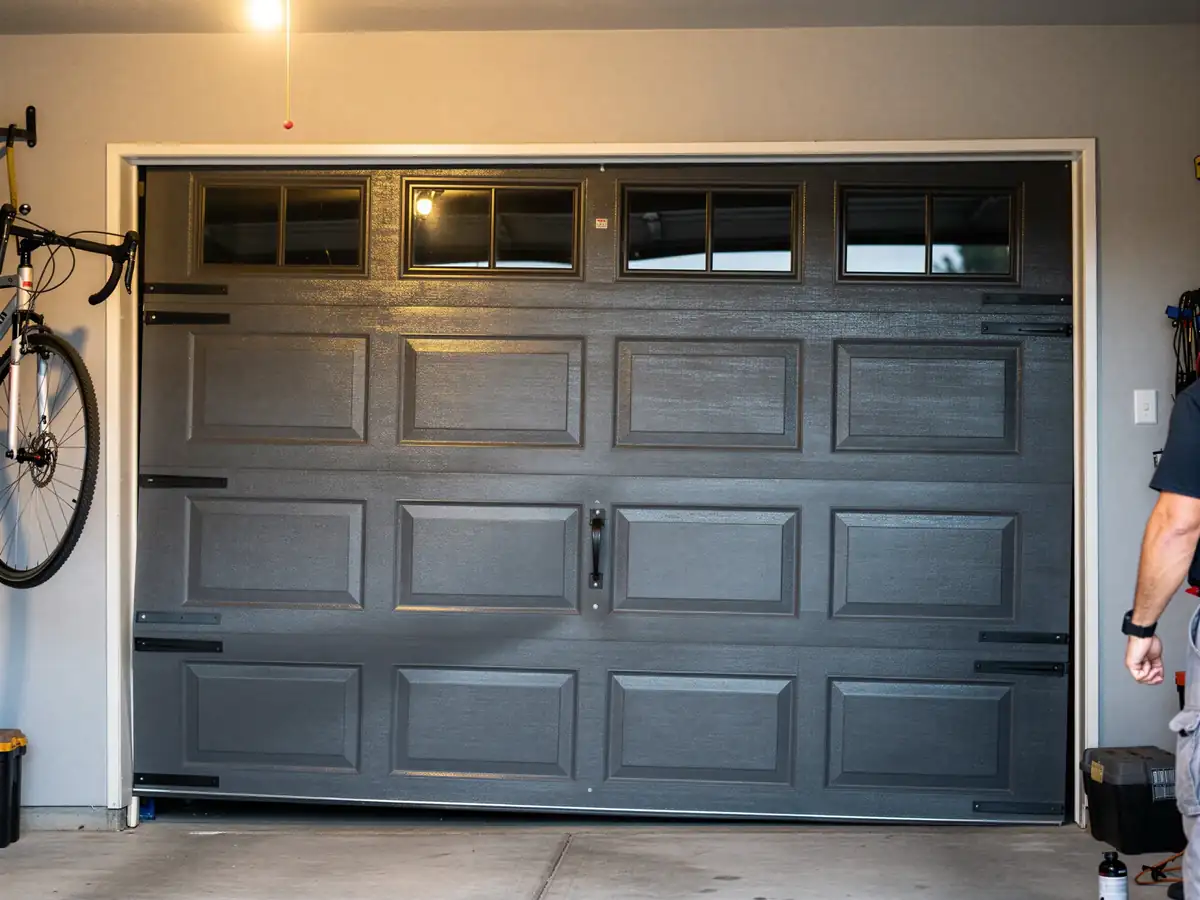
The call usually starts the same way: the door's fine in the morning, sluggish by mid-afternoon, and by evening the opener is straining or reversing halfway up. That's a spring losing tension as the steel heats and cools through the day, not a one-time glitch. Other households call about a grinding or clicking opener that got noticeably worse over a few weeks - that's a drive gear giving out under sustained heat load, common in the chain-drive units that came standard through the 90s. Cables that look frayed right where they wrap the bottom bracket, or a door that drops unevenly on one side, point to a cable or roller near failure rather than the opener at all. And in homes with the original builder-grade rollers still in, the door tends to get loud first - a rattling, metal-on-metal sound in the track - months before it actually sticks or jams.
Why It Happens Here
Laredo sits in a severe heat band, and that matters more for garage doors than people expect: steel springs and tracks expand and contract every single day here, not just seasonally, and that daily cycling fatigues metal faster than it would in a milder climate. Add a housing stock mostly built between 1975 and 2007 - median year 1992 - and you've got thirty-plus years of original or first-replacement hardware that was never rated for this kind of thermal cycling to begin with. Across the roughly 3,082 households and 1,608 owner-occupied houses in the areas we cover, the pattern repeats: torsion springs rated for a certain cycle count hit that count sooner here than the spec sheet assumed, and chain-drive openers from the 80s and 90s run hotter and fail at the gear before anything else gives. It's not bad luck or bad installs in most cases - it's steel doing exactly what steel does under sustained heat, on hardware that's now old enough that it was due for attention anyway.
How it works
From “it’s stuck” to “it’s fixed”
01
Tell us what’s wrong
Describe the symptom - won’t open, loud bang, opener runs but the door won’t move.
02
On-site diagnosis
A technician tests the door under power and by hand and finds what actually failed.
03
Clear, up-front plan
You get the fix that’s needed and what drives the cost - before any work starts.
04
Repaired & tested
The repair is done, the door is set true and tested, and the work area left clean.
Not sure which repair your door needs in Laredo, TX? Describe what it’s doing - every job starts with a diagnosis.
Why does my garage door only act up in the afternoon?
Heat. Torsion springs and steel tracks expand through the day, and by afternoon the tension is off enough that the opener strains or reverses. It's not random - it's the daily thermal cycle Laredo's severe heat band puts on steel hardware, and it gets worse, not better, if the spring isn't replaced.
Is my opener too old to fix?
Depends on the part that failed. Drive gears, capacitors, and sensors we stock and replace same visit. Circuit boards for the oldest units sometimes have to be ordered, since the manufacturer may not support that model anymore. We'll check before we start and tell you straight if ordering is needed.
How do I know if it's the spring or the opener?
Disconnect the opener and lift the door by hand. If it's heavy, uneven, or won't stay up on its own, that's the spring losing tension - common in homes built in the 1980s-90s pocket. If it lifts easily by hand but the opener still struggles, the problem is in the opener itself.
Do you work outside the main part of Laredo?
We cover the service area including Los Fresnos, and out toward Unitec Industrial Park. Call to confirm your address is in range before you schedule, since response windows vary by distance.
Ready to get your garage door sorted?
Tell us what it’s doing and where you are in Laredo - we’ll take it from there.